FROM CHAOS
TO CLARITY
Two design systems. No source of truth. A soft launch that exposed everything. This is how a banking app for Nepal's next generation went from internal chaos to something users could actually trust.
I JOINED AFTER THE PRODUCT WAS ALREADY BUILT.
OrangeNXT is a next-gen mobile banking app for Millennials and Gen Z in Nepal — bank from your phone, no branch visit. When I joined Fonenxt as Lead Product Designer, two incomplete design systems ran in parallel. Every screen felt like a different product.
I raised the design overhaul multiple times over months — never a flat no, never a yes. Always one feature away from being prioritised. So I kept building. And I kept watching.
SOFT LAUNCH. REAL USERS. UNCOMFORTABLE TRUTHS.
We soft-launched 15th October. I ran usability testing — 7 participants, structured scenarios. What they showed us was uncomfortable. I brought the data to the CEO and PO. The testing gave us the language to finally act.
WE THOUGHT IT WAS A VISUAL PROBLEM. IT WAS A TRUST PROBLEM.
Before testing, the assumption was inconsistent UI — fix the design system, fix the app. The testing reframed everything. What was killing users was silence. Every sensitive request arrived without explanation. For a banking app, silence reads as suspicious.
TEN DAYS. EVERY DECISION COUNTED.
My window for onboarding was roughly 10 days before handoff to development. We started with the design system, not screens — one system, one source of truth, one tone of voice. I structured the team around strengths: interaction, illustration & microanimations, sequential phases.
The moment we nearly lost the most time was the dashboard. All four of us had ideas and started building simultaneously. Divergence has a time limit in a sprint.

.webp)

.webp)


.webp)


FIVE DECISIONS. NONE OF THEM EASY.
Each traces back to something a user showed us — and each involved real friction with engineering or the product team.
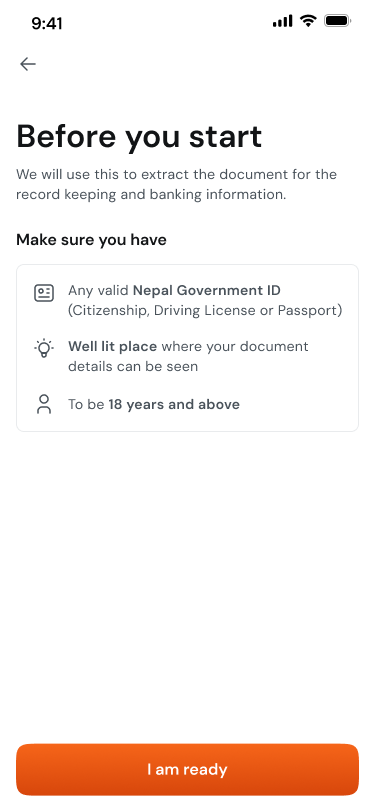
The product team wanted an overlay on the camera screen. My argument: an overlay competes with the camera UI, gets dismissed quickly, and doesn't give the message space to land.
We pushed for a dedicated full screen — “Before you start” with three clear requirements. Simple, scannable, impossible to miss.
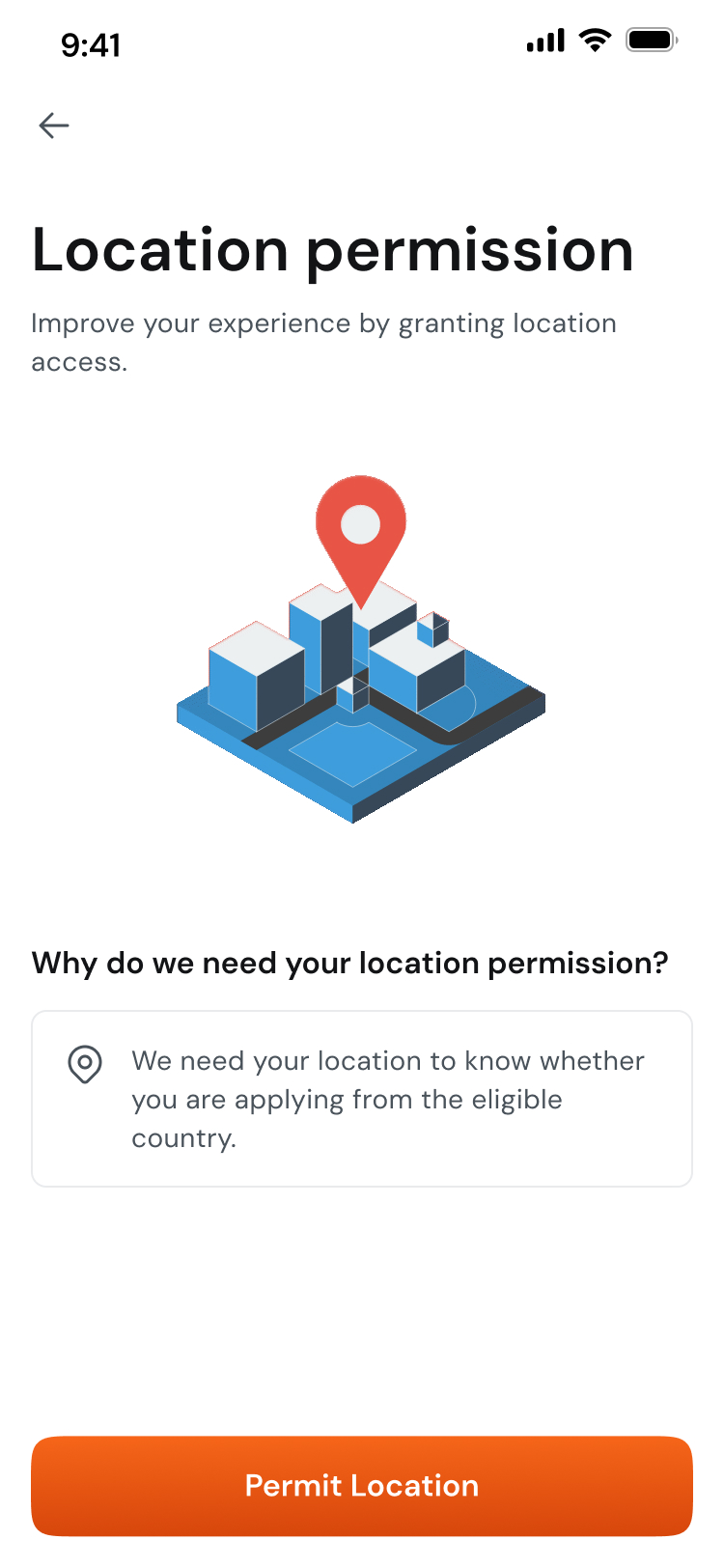
Location permission was declined by almost everyone — no one explained why the app needed it. We added an explainer before every sensitive request: location, selfie, document. Same principle, applied consistently.
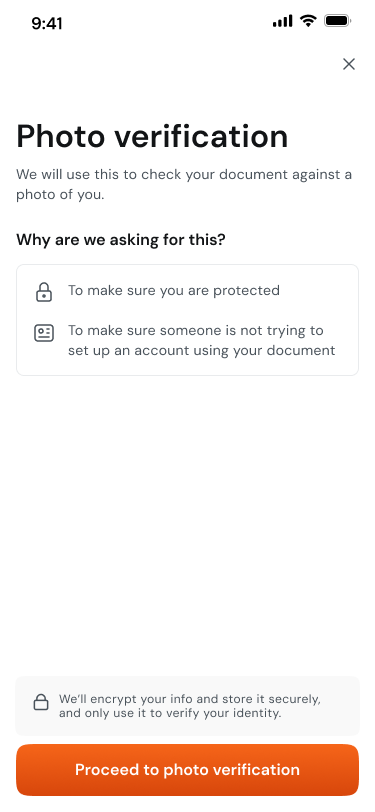
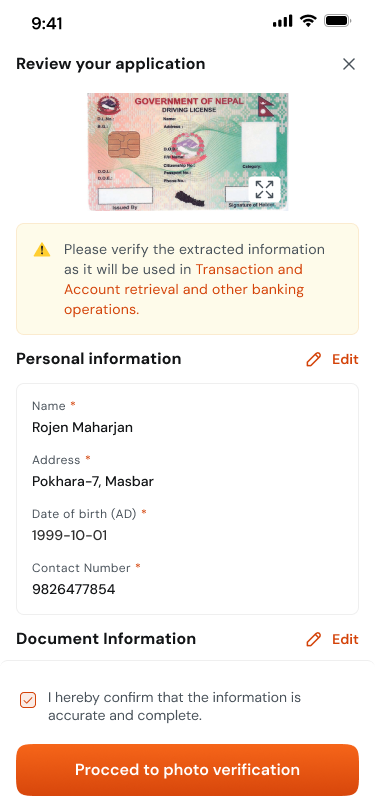
Engineering pushed back on card layout — API dependencies made it complex. We tested with new interns who had zero prior exposure. Majority preferred cards — not because they looked better, because they felt less like paperwork.
Evidence ended the argument.
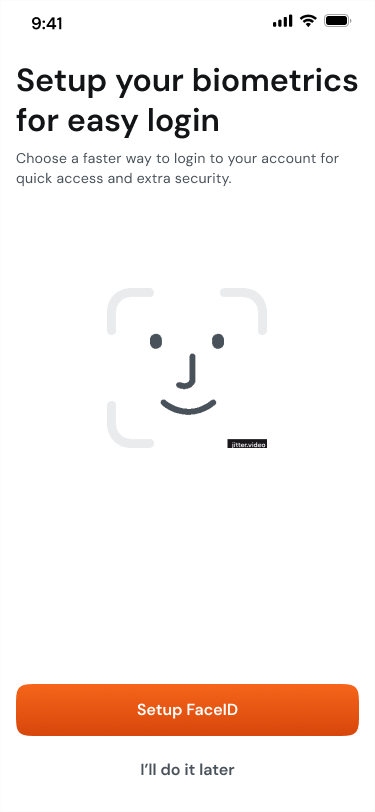
Inherited mandatory FaceID with no skip. Three changes: added “I'll do it later”, reframed as a benefit not a requirement, added a microanimation to make it feel human rather than clinical.
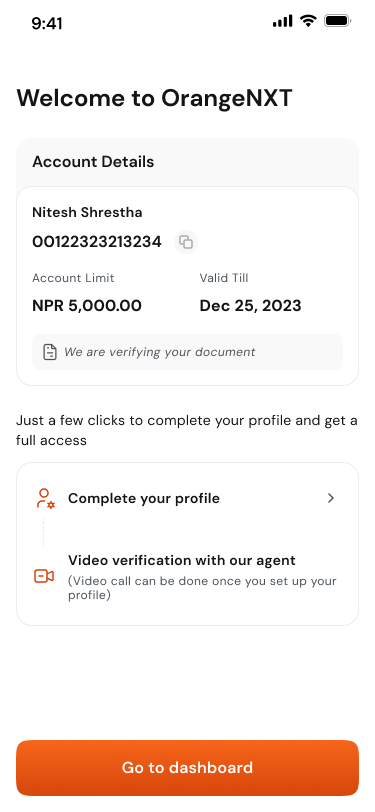
NPR 5,000 temporary limit until verification. The previous design hid this — users discovered it after finishing onboarding. A constraint discovered by accident is a betrayal.
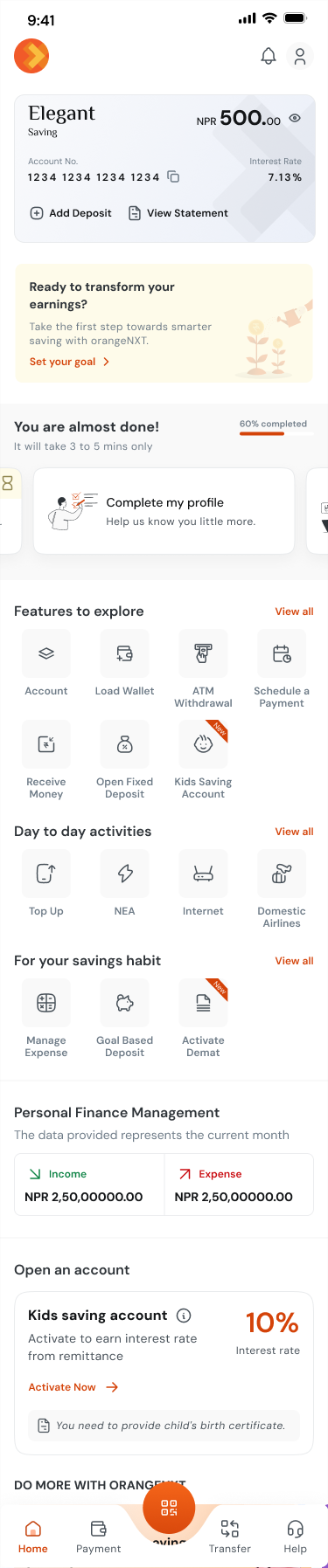
We showed the limit immediately after account creation, then added a “60% completed” dashboard nudge to keep momentum. Borrowed from gaming, applied to banking.
TWO FLOWS. NAVIGATE EACH INDEPENDENTLY.
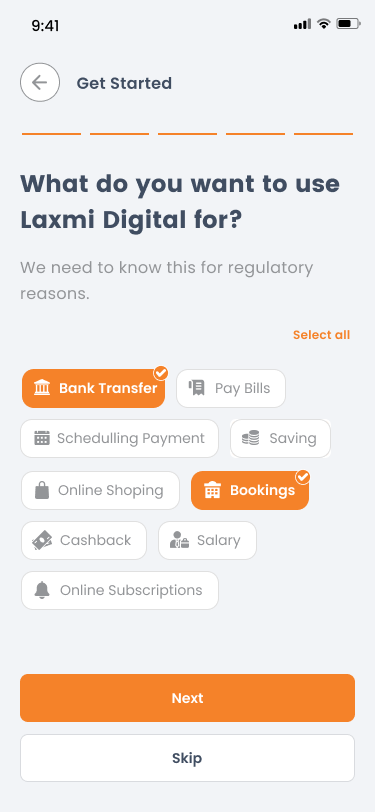
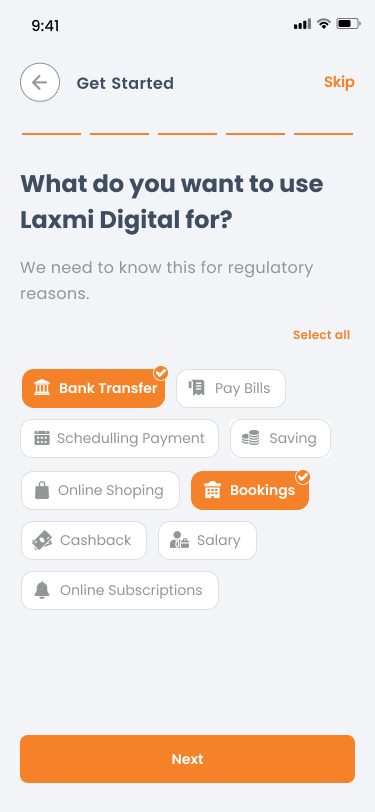
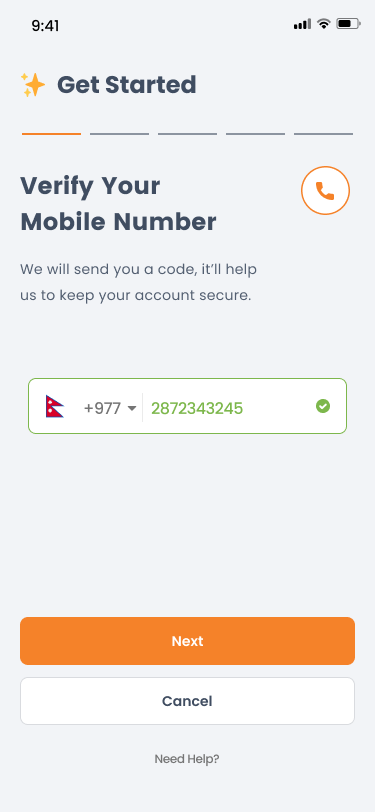
The old flow had 14 screens including 4 generic walkthrough slides before signup. The redesign has 30 screens, each earning its place.
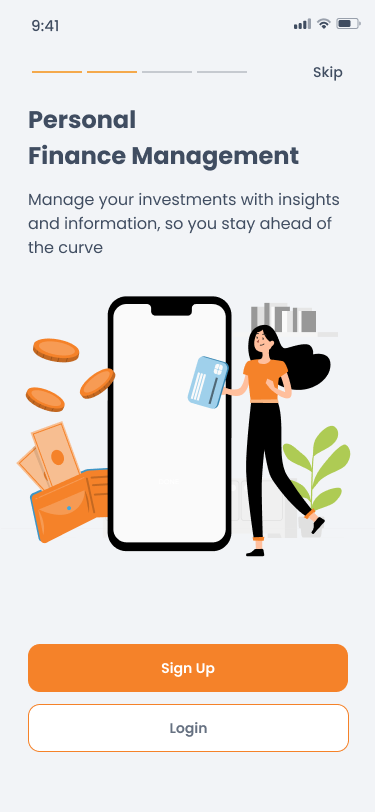
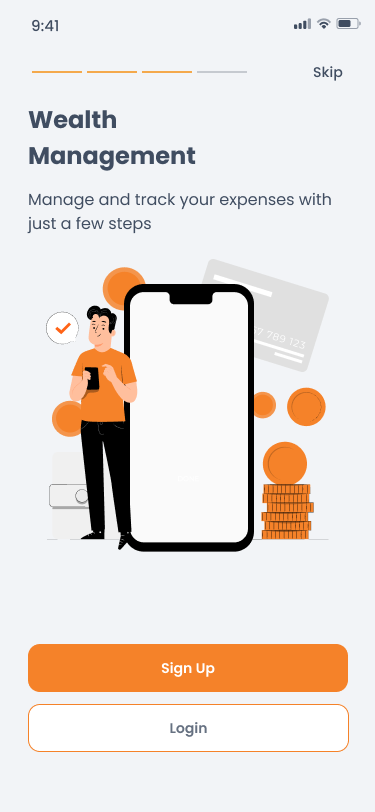
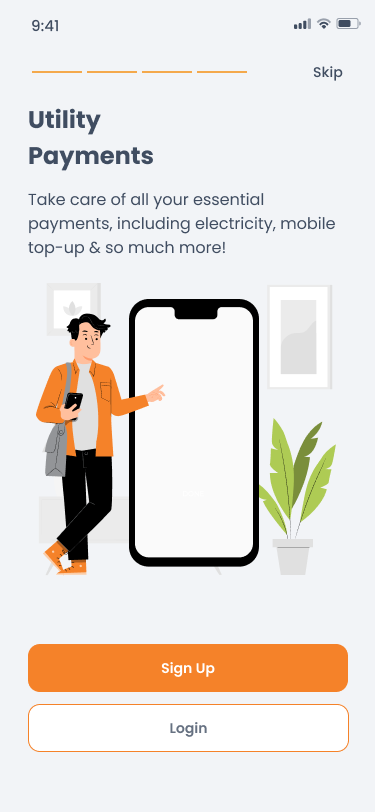
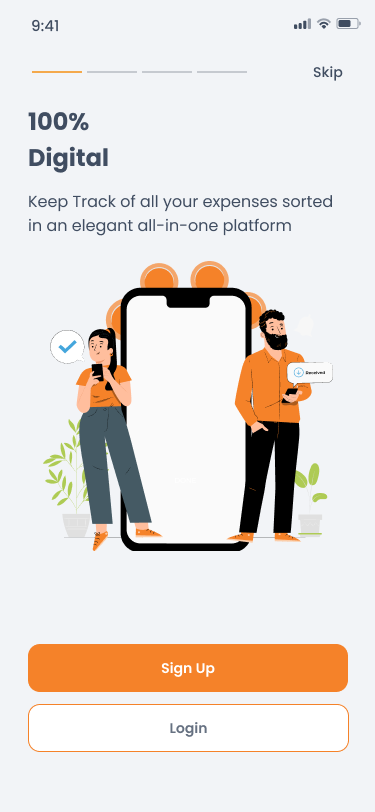
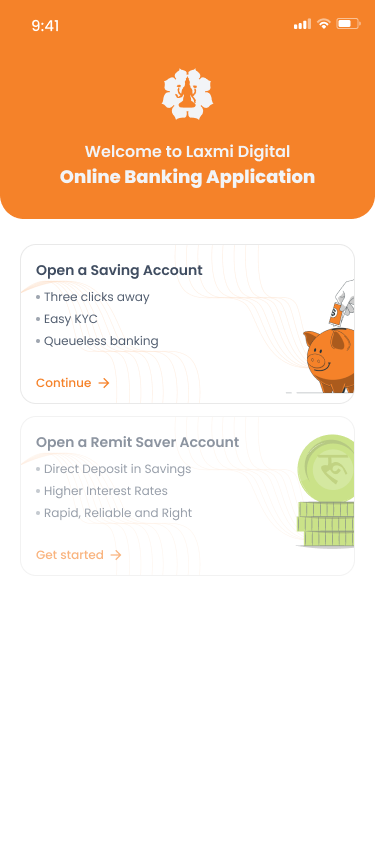
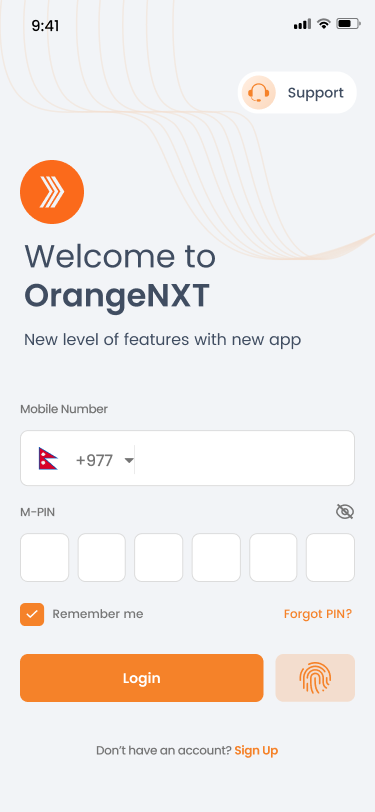
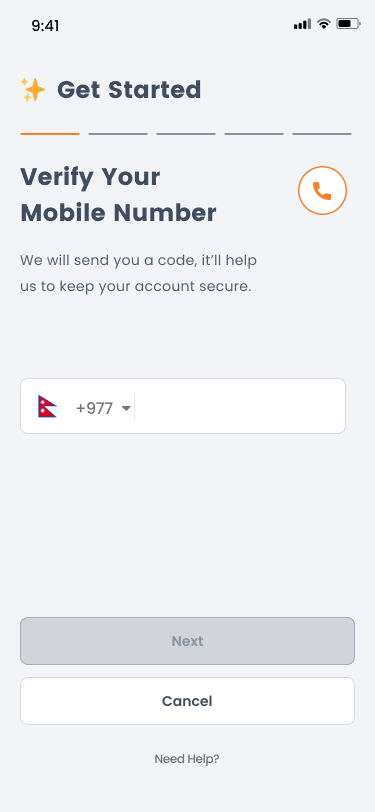
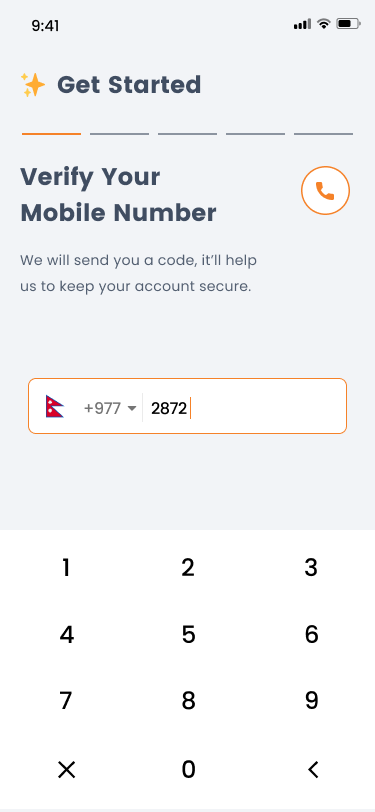

4 generic walkthrough slides before signup. No brand, no trust. Users arrived at every sensitive step cold — no context, no explanation.
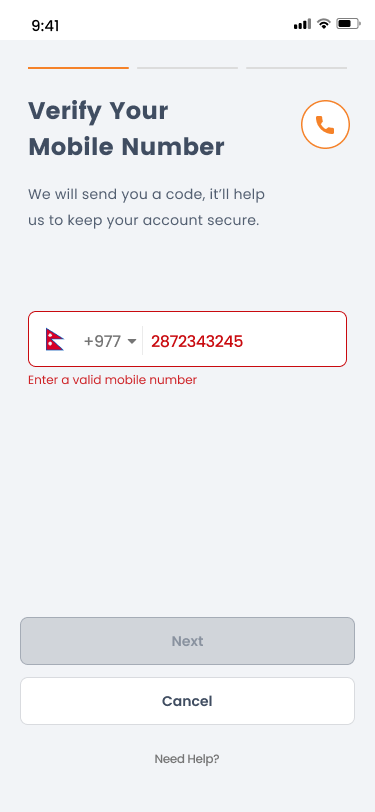
Every sensitive request explained before asking. “Before you start” eliminates the biggest drop-off. Trust built screen by screen, not assumed.
ONBOARDING DONE RIGHT.
We didn't have clean before metrics — the soft launch was the first time real users touched the product at scale. Our baseline was observation: users abandoning mid-flow, photographing wrong documents, hesitating at every sensitive request.
The NPR 2 crore transaction target wasn't hit in the first month — onboarding conversion alone doesn't guarantee transaction behaviour. But 960 monthly users was cited by the CEO at a company town hall. The redesign did what it was scoped to do.
The design system built for this project became the foundation for the entire OrangeNXT product.
THE WORK I DIDN'T FINISH.
LOOKING BACK
This project taught me that the hardest design problems in fintech aren't the UI ones — they're the trust ones. Every screen where a user hesitated wasn't a layout problem. It was a communication problem.
If I were starting over, I'd push harder on the FATCA and PEP declarations. We improved the framing but didn't go far enough. The right solution was to replace legal jargon with plain language entirely.
I'd also advocate for a progress indicator across the full onboarding flow — not just the post-signup dashboard. Users in testing often didn't know how far they were from completion.
“The design still isn't accessible to everyone — not for users with visual or hearing impairments, or people in remote Nepal who can't read or write. A banking app that claims to democratise finance but only works for the literate and able-bodied hasn't fully solved the problem. That's the next version of this work.”